Quick Summary
- Winter tyres are legally required across much of the Nordic region during cold-season conditions.
- Several Nordic countries require headlights on at all times, year-round, reflecting the region's long winters.
- Wildlife — particularly elk and reindeer — poses a real driving hazard, especially at dawn and dusk.
Scandinavia and the wider Nordic region — Norway, Sweden, Denmark, Finland, and Iceland — offer some of the world's most beautiful driving, from fjords and forests to the Northern Lights. But the region's climate and rules demand preparation. This guide covers everything you need for a Nordic road trip, from winter tyres to IDPs.
Licences and IDPs in the Nordics
EU/EEA licence holders can drive across the Nordic EU countries on their existing licence. Non-EU/EEA visitors should carry an IDP as the recognised translation of their national licence. Conversion rules for residents vary — Norway has a notably short window for non-EEA holders, while Finland can allow longer. Check your status before a long stay.
For visitors, an IDP plus national licence covers driving across this stunning region.
Expert Driving Tip: In the far north of Norway, Sweden, or Finland during winter, check road status reports the morning of departure rather than relying on the previous day's forecast — mountain and Arctic routes can close with little warning, and local transport authority updates are more current than general weather apps.
Winter Tyres Are Essential
Winter driving is serious in the Nordics. Winter tyres are legally required during the cold season or in winter conditions across much of the region, and studded tyres are common. Rental cars in winter are usually equipped, but confirm when booking. Driving on inadequate tyres in Nordic winters is both dangerous and often illegal.
Proper winter tyres are non-negotiable for safe, legal cold-season driving in Scandinavia.
Headlights and Visibility
Several Nordic countries require headlights (or daytime running lights) to be on at all times, day and night, year-round. This reflects the region's long, dark winters and variable light. Reduced winter daylight also means planning journeys for the limited bright hours, especially on unfamiliar or mountain roads.
Following the always-on headlight rule and planning around daylight keeps you safe and legal.
Tolls and Road Systems
The Nordics use various toll systems, many electronic and automatic. Norway has extensive automatic tolling that charges via number-plate recognition, often with rental cars registered to pass through. Confirm how your rental handles tolls. Roads are generally excellent and well-maintained, even in remote areas, though mountain and ferry routes add character.
Understanding the automatic toll systems avoids surprise charges after your Nordic trip.
Wildlife and Natural Hazards
Wildlife is a real hazard — elk (moose), reindeer, and deer can appear on roads, especially at dawn and dusk, and collisions with large animals are dangerous. Watch for warning signs, reduce speed in wildlife areas, and be especially careful at twilight. In the far north, reindeer on roads are common.
Vigilance for wildlife, particularly large animals, is essential on Nordic roads.
Spectacular Routes and Remote Driving
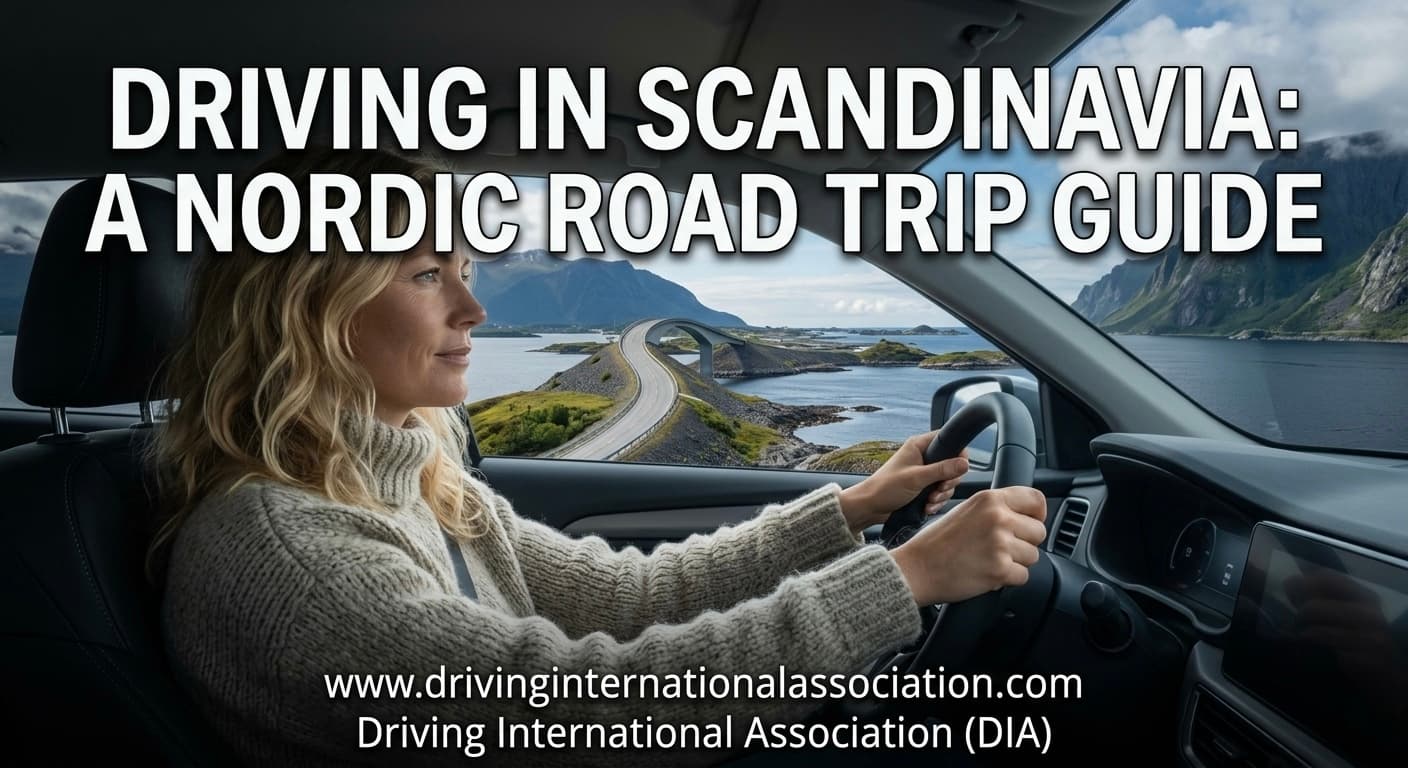
The Nordics reward drivers with extraordinary routes: Norway's fjord roads and Atlantic Road, Sweden's lakes and forests, Finland's Lapland, and Iceland's Ring Road. Many are remote, so plan fuel stops, carry supplies, and prepare for changeable weather. The remoteness is part of the magic, but demands self-sufficiency.
Preparing for remoteness lets you safely enjoy some of the planet's most beautiful driving.
Seasonal Considerations
Summer brings long daylight (even midnight sun in the north) and easier driving, while winter offers the Northern Lights but demanding conditions. Some mountain roads close in winter, and ferry schedules vary by season. Choosing your season — and preparing for its specific conditions — shapes your whole Nordic road trip.
Matching your preparation to the season is key to a successful Nordic adventure.
Getting Ready for the Nordics
In summary: carry an IDP as a non-EU visitor; ensure winter tyres in the cold season; follow always-on headlight rules; understand automatic tolls; watch for wildlife; prepare for remote, changeable conditions; and choose your season wisely. With these in place, a Nordic road trip is unforgettable.
Thorough, climate-aware preparation unlocks the breathtaking driving the Nordic region offers.
Frequently Asked Questions
Q1: What is an International Driving Permit and do I need one?
An IDP is a multilingual translation of your driving licence recognised in 150+ countries. If you're driving abroad and your destination requires one, Driving International Association (DIA) delivers your IDP Digital Booklet in 2 hours from $21.
Q2: What is the difference between the IDP Digital Booklet and the NFC Smart Kit?
The IDP Digital Booklet is your official primary IDP delivered digitally in 2 hours, with a complimentary Digital Smart Card included. The NFC Smart Kit gives you the physical IDP Booklet with a complimentary physical Smart NFC Card — ideal for countries like Thailand and Japan that expect physical documentation.
Q3: How fast does Driving International Association deliver an IDP?
The IDP Digital Booklet (with complimentary Digital Smart Card) is delivered within 2 hours of payment. The physical NFC Smart Kit ships separately after digital delivery.
Q4: Is the Driving International Association IDP accepted internationally?
Driving International Association issues IDPs aligned with the 1949 Geneva and 1968 Vienna UN Conventions on Road Traffic — the international framework recognised by rental companies and transport authorities in 150+ countries.
Q5: How much does a Driving International Association IDP cost?
IDP Digital Booklet: $21 (1yr), $26 (2yr), $32 (3yr). NFC Smart Kit (physical IDP Booklet + complimentary Smart NFC Card): $32 (1yr), $37 (2yr), $42 (3yr). 100% money-back guarantee on all orders.
Q6: Does an IDP replace my driving licence?
No. The IDP Digital Booklet is a translation of your existing licence and must always be carried alongside it. Both documents are required when driving abroad.
Have questions? Chat with Driving International Association on WhatsApp — 24/7 →